
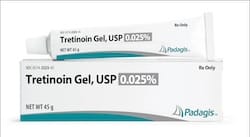
Buy Tretinoin Gel Online at the Best Price
Mastering the Application of Tretinoin Gel
Treat your nighttime skincare routine like a high-stakes surgical procedure. You wouldn’t rush into a delicate operation without preparing the theater, and your face deserves that same level of care. Start by cleansing your skin with a gentle, non-stripping cleanser. Pat your face dry and wait at least twenty minutes. This waiting period is non-negotiable.
Applying tretinoin to damp skin is like pouring gasoline on a small fire. Water helps the gel penetrate much deeper and faster than intended. This often leads to a stinging sensation that feels like a sunburn. Patience is your best friend here. Let your skin reach a completely neutral, bone-dry state before you even touch the tube.
Once your skin is dry, follow the “pea-sized amount” rule. Many people think they need a thick layer to see results, but more is definitely not better. A single, tiny pearl of gel is all you need to cover the entire face. Using too much is a recipe for disaster, turning your complexion into a desert.
If you find yourself running low on product every week, you are likely over-applying. A single $50 tube should last a significant amount of time if you stick to this method. Distribute the pea-sized amount by dotting it on your forehead, cheeks, and chin. Spread it thinly, like you are applying a sheer veil of silk.
The first few weeks can feel like a rollercoaster ride. You might notice more breakouts, redness, or flaking—a phenomenon known as “purging.” It is essentially your skin’s way of clearing out the old to make room for the new. It is frustrating, but think of it as a necessary renovation for your facial landscape.
When the dryness starts to bite, do not panic or abandon the treatment. Instead, adopt the “sandwich method” to buffer the intensity. Apply a thin layer of a basic, fragrance-free moisturizer first, then apply your tretinoin, and finish with another layer of moisturizer. This creates a protective barrier that mitigates irritation without neutralizing the medication.
Timing is everything when you are navigating this transition. If your skin feels particularly sensitive, you can scale back your frequency. You don’t have to jump into the deep end immediately. Start with twice a week, then gradually increase the frequency as your skin’s tolerance builds up over the coming months.
| Step | Action | Why It Matters |
| 1 | Cleanse & Dry | Prevents irritation from moisture absorption. |
| 2 | Apply Pea-Sized Amount | Limits chemical burn risks and waste. |
| 3 | Moisturize (Sandwich) | Buffers the active ingredient for comfort. |
Avoid common pitfalls like mixing tretinoin with other strong acids in the same evening. Using Vitamin C or Salicylic Acid at the same time can be like throwing salt in a wound. Keep your actives separate; use your acids in the morning or on different nights to let your skin breathe.
Finally, remember that consistency is the name of the game. You won’t wake up with glass skin overnight. It is a marathon, not a sprint. Stay the course, keep your moisturizer close, and your sunscreen closer. Your future self will thank you for the discipline you show today.
Dosage Schedules and Skin Tolerance
Jumping into a high-strength regimen without a roadmap is like trying to drive a Ferrari through a narrow, winding mountain pass without any brakes. You will likely crash. Most dermatologists suggest a slow, deliberate approach to allow your cellular turnover to adjust to the sudden chemical stimulation.
If your skin is particularly finicky, the “sandwich method” is your best friend. It acts as a buffer between the potent gel and your sensitive epidermis. First, apply a lightweight, fragrance-free moisturizer. Let it sink in, then apply your tretinoin, and finally, seal everything in with another layer of cream.
This technique doesn’t stop the medicine from working; it simply slows down the rate of absorption. It turns a potentially aggressive strike into a gentle, sustained release. For many, this is the difference between a glowing complexion and a face that looks like it has been sandpapered every night.
Progression should be a slow climb, not a vertical leap. Start by applying the gel just twice a week—perhaps on a Monday and a Thursday. This gives your skin ample time to recover and recalibrate its moisture barrier before you introduce the next dose of vitamin A.
Once your skin stops feeling tight or itchy after those initial sessions, you can move to every other night. Eventually, if you have mastered the art of the “tretinoin glow,” you may progress to nightly application. However, there is no prize for being the fastest; the goal is long-term skin health.
Understanding the potency of your specific gel is vital for setting expectations. A 0.025% concentration is often the “training wheels” of the retinoid world, perfect for beginners. It provides a gentle nudge to the skin’s renewal process without causing widespread chaos or extreme peeling.
The 0.05% concentration is the middle ground, often where the real magic happens for many users. It is more robust and requires a bit more discipline regarding the sandwich method. Many people find this to be the “sweet spot” for treating fine lines and acne simultaneously.
Finally, the 0.1% concentration is the heavy hitter. This is not for the faint of heart or the uninitiated. It is incredibly potent and should only be introduced once your skin has proven it can handle the lower strengths without breaking into a red, flaky mess.
Watch for the red flags of over-exfoliation. If your skin feels hot to the touch, looks shiny like plastic, or stings when you apply even a basic moisturizer, it is time to retreat. You must pause all tretinoin use immediately until the irritation subsides.
During these “recovery phases,” focus entirely on hydration and barrier repair. Think of it as a ceasefire in a war. Once the redness vanishes and the peeling stops, you can slowly reintroduce the gel at a lower frequency. Listen to your skin; it is the only expert that truly matters.
The timing of your application is just as critical as the strength. Tretinoin is notoriously light-sensitive and can break down when exposed to UV rays. Therefore, it should almost always be applied in the evening to maximize its efficacy and protect the integrity of the formula.
While you might be tempted to use it in the morning to “get it over with,” this is a mistake. Applying it in the AM increases the risk of sun sensitivity and reduces the product’s potency. Keep your morning routine focused on protection and your evening routine focused on repair.
Below is a breakdown of common treatment plans and their estimated monthly costs to help you budget for your journey.
| Plan Type | Typical Concentration | Est. Monthly Cost |
| Beginner Buffer | 0.025% | $45 |
| Intermediate Glow | 0.05% | $60 |
| Advanced Correction | 0.1% | $85 |
| Sensitive Support | 0.025% (Sandwich) | $55 |
Market Price Comparison and Value Assessment
Navigating the Cost of Prescription vs. OTC
Stepping into the world of retinoids is a bit like choosing between a bespoke suit and a fast-fashion alternative. Prescription-strength tretinoin is the gold standard, offering precise concentrations that over-the-counter (OTC) retinol simply cannot match. While OTC products are cheaper upfront, they often require much larger amounts to achieve similar results.
When you look at the price tag, prescription options typically range from $20 to $100 per month depending on your insurance. OTC retinoids, on the other hand, can be found for as little as $15 at a drugstore. It is a classic case of “you get what you pay for” in the skincare arena.
However, the math changes when you consider efficiency. Because tretinoin is so potent, a pea-sized amount goes a long way. You might find yourself burning through a $50 prescription tube much faster than a $30 drugstore serum, but the actual biological impact is often vastly different and more significant.
Many users find that the “sticker shock” of a doctor’s visit is offset by the efficacy of the medicine. It is better to spend a little more on a product that works than to waste money on a dozen bottles of a weak alternative that leaves your skin waiting for results.
Tube Sizes and Long-Term Value
When you are standing in the pharmacy aisle or scrolling through an online pharmacy, the different tube sizes can feel like a math exam. You have to look past the initial price to find the true value. It is easy to get caught up in the small numbers on the shelf.
The 15g tube is the “taster” size. It is perfect for someone testing the waters or for those with very sensitive skin who need to start slow. Expect to pay roughly $30 to $45 for this amount. It is convenient, but you will find yourself refilling it quite often.
The 30g tube is the standard workhorse for most long-term users. This size usually sits in the $50 to $75 range. It strikes a balance between upfront cost and longevity. Most dermatologists recommend this as the starting point for those who have committed to a nightly routine.
If you are a seasoned veteran, the 60g tube is where the real savings hide. While the price tag might look steep at $110 or more, the cost-per-ounce drops significantly. It is the “bulk buy” strategy that keeps your skincare budget from bleeding out over the course of a year.
- 15g Tube: Best for testing sensitivity; approx. $35.
- 30g Tube: The most common choice for daily users; approx. $60.
- 60g Tube: Maximum value for long-term maintenance; approx. $110.
The Hidden Cost of a Glowing Complexion
Here is the kicker: tretinoin is not a solo act. If you think the gel is your only expense, you are in for a rude awakening. Using a retinoid without a proper support system is like driving a car without oil; eventually, everything is going to seize up and smoke.
The most critical “hidden” expense is a high-quality SPF. Tretinoin makes your skin incredibly vulnerable to UV damage. If you are not using a dedicated sunscreen every single morning, you are essentially throwing your expensive treatment into a bonfire. Budget at least $20 per month for sun protection.
Then there is the “barrier tax.” Because the gel can cause dryness and peeling, you will need a heavy-duty, ceramide-rich moisturizer to soothe the skin. You can’t just use any old lotion; it needs to be thick and restorative. This can easily add another $30 to your monthly skincare overhead.
When you add it all up, a $50 tube of tretinoin actually costs closer to $100 when you factor in the necessary SPF and barrier repair creams. Always look at the total “ecosystem” of your routine rather than just the price of the active ingredient itself.
Ultimately, the goal is to build a sustainable habit. It is better to have a modest budget that covers all your essentials than to buy a luxury gel and realize you can’t afford the cream required to stop the peeling. Think of it as a holistic investment in your future self.
Sourcing and Reliable Purchasing Channels
Navigating Legitimate Online Pharmacies and Telehealth Platforms
Walking into a digital pharmacy can feel like stepping into a labyrinth. With so many tabs open, it is easy to lose your way. You want to ensure you are dealing with a legitimate entity that follows strict regulations. Look for “VIPPS” accreditation or similar pharmacy verification seals that prove the site isn’t just a storefront for shadows.
Telehealth platforms have become the modern gateway for many. Instead of waiting months for an appointment, you can chat with a licensed professional from your couch. These services often bundle the consultation and the prescription together, making the process feel seamless. It is a much more streamlined way to access high-quality, prescription-grade tretinoin gel.
Avoid any site that offers “no prescription required” deals for tretinoin. That is a massive red flag. If a website promises to ship it without a doctor’s oversight, they are cutting corners that could cost you dearly. It is better to pay the $30 consultation fee than to gamble with your skin’s long-term health.
Always check for a physical address and a working customer service line. If the website looks like it was designed in 1998 and lacks any contact information, run the other way. A reputable provider will be transparent about their medical staff and their shipping protocols, ensuring you feel secure during the entire transaction.
Red Flags for Counterfeit Products on Third-Party Marketplaces
Third-party marketplaces are a minefield of “too good to be true” offers. You might see a $90 tube of tretinoin sitting on a site like eBay or a random social media ad. It looks tempting, but remember: if the price is significantly lower than the pharmacy standard, you are likely buying a fake.
Counterfeiters are getting better at mimicking packaging, but the contents are often useless or dangerous. Some users have reported finding nothing but cheap petroleum or, worse, inconsistent concentrations that cause chemical burns. It is a high-stakes gamble where the prize is a ruined skin barrier and wasted money.
Watch out for sellers with no history or those who only accept non-refundable payment methods like wire transfers or certain crypto options. A legitimate pharmacy will always offer standard, protected payment methods. If they try to push you toward an untraceable payment, they are likely hiding something behind a curtain of anonymity.
Check the reviews, but take them with a grain of salt. Scammers often buy fake five-star reviews to boost their standing. Look for detailed, long-term feedback from actual users rather than just a string of “Great product!” comments. A little bit of detective work now can save you a lot of heartache later.
- Unrealistic Pricing: If it’s 50% cheaper than a pharmacy, it’s likely fake.
- No Prescription Req: If they don’t ask for a script, walk away.
- Untraceable Payments: Avoid sellers demanding wire transfers or non-refundable apps.
- Vague Origins: Be wary of sellers who cannot specify where the product is shipped from.
Verifying Expiration Dates and Shipping Logistics
When your package finally arrives, don’t just toss it in your vanity and walk away. The first thing you must do is check the expiration date printed on the crimp of the tube. Tretinoin is a sensitive molecule that breaks down when exposed to light and air, making its potency highly time-sensitive.
If your tube arrives with an expiration date that is only a month or two away, you should contact the provider immediately. You are paying for active, potent medicine, not a ticking time bomb. It is perfectly reasonable to demand a replacement if the product’s shelf life is insufficient for your planned usage.
Shipping timelines can be a major headache depending on where your order originates. Domestic orders are generally the safest bet, often arriving within 3 to 7 business days. International orders might seem cheaper due to lower product costs, but they often get stuck in customs for weeks, adding massive uncertainty to your routine.
| Order Type | Estimated Timeline | Risk Level |
| Domestic | 3-7 Business Days | Low |
| International | 14-45+ Days | High |
Navigating Prescription Requirements and State Laws
Laws regarding telehealth and prescription fulfillment can vary depending on where you reside. While the federal government has loosened some restrictions, some states still have specific requirements for how a doctor must interact with a patient. Always ensure your telehealth provider is licensed to practice in your specific state to avoid legal hiccups.
Some states may require a formal video call, while others might allow a more streamlined text-based consultation. This doesn’t change the medicine itself, but it does change how you access it. If you find yourself getting stuck in a loop of “not available in your region,” it is likely a state-level regulatory barrier.
Don’t assume that because you can see a doctor online, you can bypass local pharmacy rules. Some states have stricter oversight on how controlled or prescription substances are shipped. It is always wise to double-check your local regulations if you are planning to use an out-of-state service for your skincare needs.
Shipping Logistics and Product Integrity
Tretinoin is a temperamental beast when it comes to its environment. Because the active ingredient is highly sensitive to thermal fluctuations, the journey from the pharmacy to your doorstep is a high-stakes race against the thermometer. If the gel sits in a hot delivery truck for too long, it can lose its potency before you even squeeze the first drop.
Think of it like a delicate soufflé; if it gets too warm, the whole thing collapses. While manufacturers use stabilized formulas, extreme heat exposure during transit can trigger chemical degradation. You want a product that is as potent on day thirty as it was on day one. Protecting that molecular stability is the primary goal of modern pharmaceutical logistics.
To prevent this, reputable pharmacies often use insulated packaging or specialized liners to buffer against sudden temperature spikes. While these extra layers might add a few $ to your total cost, they are a small price to pay for peace of mind. It is better to pay slightly more for a protected shipment than to receive a useless, degraded gel.
The Logistics of Transit and Delivery
The way your order is packed matters just as much as how fast it moves. Since tretinoin gel has a specific viscosity, it is prone to leaking if the tube is crushed or subjected to pressure changes during flight. High-quality packaging usually involves secondary containment to ensure that a small leak doesn’t turn into a sticky, expensive mess.
When you place your order, you will typically see two main paths for arrival. Expedited shipping is the “express lane,” often arriving within 2 to 3 business days, which is ideal if you are running low. Standard shipping is the slower, more economical route, usually taking about 5 to 10 days to reach your mailbox depending on your location.
Once the package leaves the facility, you shouldn’t be left staring at a blank screen. Always use the tracking number provided by your pharmacy to monitor the package’s progress. Real-time tracking allows you to anticipate its arrival so you can move it to a cool spot immediately upon delivery, rather than leaving it in a hot mailbox.
- Expedited Shipping: 2-3 business days; best for urgent refills.
- Standard Shipping: 5-10 business days; the cost-effective choice.
- Tracking: Essential for monitoring temperature-related delays.
Handling Heat and Arrival Protocols
Life happens, and sometimes your package might spend an unexpected afternoon sitting on a scorching porch in the sun. If you notice the package feels warm to the touch or the delivery driver mentions extreme weather, don’t panic, but do act quickly. You need to stabilize the medicine before the heat does permanent damage.
If the package arrives in high heat, do not immediately squeeze the gel out of the tube to check the consistency. Rapidly cooling a warm gel can sometimes cause the formula to separate or change texture. Instead, move the package to a cool, dry place—like a drawer or a room with air conditioning—and let it reach room temperature naturally.
If the gel looks oily, watery, or has changed color significantly, it might be a sign that the integrity has been compromised. In such cases, reaching out to the pharmacy is your best bet. It is better to be safe than sorry when it comes to your skin’s health, especially when using a powerful retinoid.
| Condition | Immediate Action | Next Step |
| Warm Package | Move to cool area | Wait for stabilization |
| Separated Gel | Contact provider | Request replacement |
| Discolored Gel | Do not use | Report to pharmacy |
Comparing Tretinoin Gel to Retinol and Adapalene
Navigating the world of retinoids is like entering a high-stakes poker game where the stakes are your skin’s texture and clarity. You might start with over-the-counter retinol, thinking it’s a gentle entry point, but it often feels like bringing a knife to a gunfight when compared to prescription-strength tretinoin. The potency gap is massive, and understanding this hierarchy is vital.
Retinol is essentially a “diet” version of the active ingredient, requiring several conversion steps within the skin before it can actually work. Adapalene, often found in acne-focused OTC products, is a more direct sibling that skips some of the heavy lifting. However, tretinoin gel is the heavy hitter, delivering the active molecule directly to your cells without the metabolic delay.
If you are chasing the “gold standard” for rapid results, tretinoin is the undisputed champion. While retinol might take months to show a glimmer of change, tretinoin gel works with a certain ruthless efficiency. It is the difference between a slow-burning candle and a concentrated laser beam aimed at your complexion.
Potency and the Science of Penetration
The delivery vehicle—the gel versus the cream—is a game changer for how your skin absorbs the medicine. Creams are often loaded with heavy emollients and oils designed to sit on the surface and lock in moisture. While this feels luxurious, those thick lipids can sometimes act as a barrier, slowing down the active ingredient’s journey.
A gel, however, is a lean, mean, penetrating machine. Because it lacks those heavy, occlusive fats, the tretinoin can slip through your skin’s natural defenses much more easily. This rapid penetration is why gels are often perceived as “stronger,” even if the concentration of the active ingredient were exactly the same as a cream.
Think of it like trying to soak up water with a sponge versus a thin sheet of paper. The gel’s lightweight structure allows it to dive deep into the pores almost immediately. For those with stubborn issues, this directness is a blessing, though it can certainly lead to a more intense “retinoid purge” during the initial weeks.
Targeting Your Specific Skin Goals
Not all skin concerns are created equal, and neither are the treatments designed to fix them. If your primary battle is with rogue breakouts and clogged pores, adapalene is often the first line of defense. It was specifically engineered to target the acne cycle, making it a reliable tool for those struggling with persistent blemishes.
If you are looking to erase the fine lines and wrinkles that have begun to settle into your forehead, tretinoin gel is your best ally. It works at a deeper level to stimulate collagen production and speed up cell turnover. It’s the heavy artillery for those seeking to reclaim a youthful, smooth surface through sheer biological force.
For those battling hyperpigmentation or sun damage, the choice becomes a matter of intensity versus patience. Retinol can help fade dark spots over a long period, but tretinoin gel is the fast track for significant pigment correction. It forces old, pigmented cells to shed more quickly, revealing the fresher, more even skin underneath.
- Acne focus: Adapalene is the specialist for breakouts.
- Aging focus: Tretinoin gel is the powerhouse for wrinkles.
- Pigment focus: Tretinoin offers the fastest results for dark spots.
- Maintenance: Retinol is the steady, slow-and-steady approach.
Selecting the Right Format for Your Skin Type
Your skin type is the compass that should guide your choice between a gel and a cream. If you have oily or combination skin, a gel is often a match made in heaven. It provides the necessary active ingredients without adding extra grease or oil to your already shiny T-zone, preventing that heavy, suffocating feeling.
On the flip side, if your skin is naturally dry or prone to flaking, the gel might feel like a desert storm. The rapid absorption can leave you feeling tight and parched. In these cases, a cream-based retinoid or a very heavy moisturizer used alongside your gel is non-negotiable to prevent a compromised skin barrier.
The “learning curve” is perhaps the most intimidating part of the journey. Retinol is the easiest on the skin, making it the perfect training wheels for beginners. Adapalene sits in the middle, providing more punch without the extreme irritation. Tretinoin gel, however, is the deep end of the pool; it requires discipline and a very slow introduction.
| Skin Type | Best Format | Expected Sensation |
| Oily | Gel | Lightweight & Fast |
| Dry | Cream | Soothing & Rich |
| Sensitive | Low-strength Retinol | Gentle & Slow |